Services
A digital marketing agency starts with a thorough audit of your current online presence, followed by detailed analysis of your audience, competitors, and performance data. Using clear analytics, the agency defines measurable goals, builds a tailored strategy, launches targeted campaigns, continuously tracks results, and focuses on improving ROI to help your business grow efficiently.
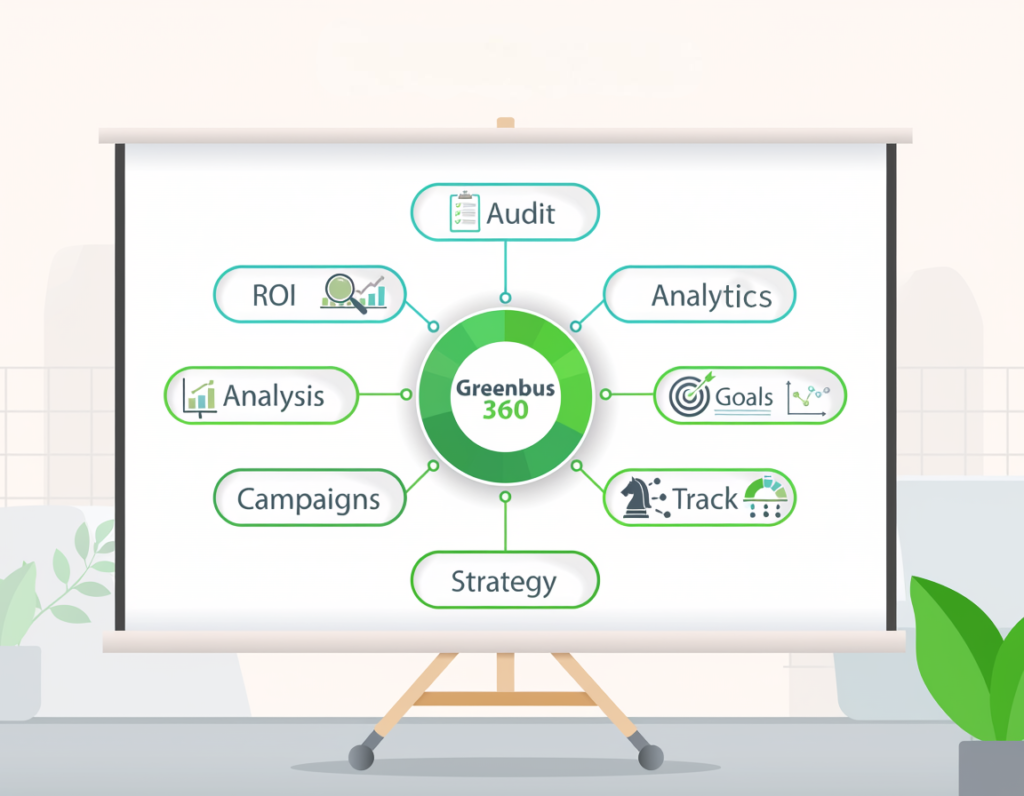
- Audit
The agency reviews everything the business has now: website, SEO, social media, email, ads, branding, and competitors.
They look for problems (slow website, weak copy, bad tracking) and quick wins (pages that could easily rank, audiences to retarget).
- Analysis
Using the audit results, they interpret what is happening: why traffic is low, why leads don’t convert, which channels work better.
They segment data (by device, location, audience, channel) to understand where the best opportunities are.
- Analytics
They set up and use tools like Google Analytics, Google Tag Manager, Meta Pixel, CRM reports, etc., to collect and visualize data.
They build dashboards and reports to monitor key metrics like traffic, leads, cost per lead, and sales over time.
- Goals
With the client, they define clear, measurable goals: for example, “get 100 leads per month” or “increase online sales by 20% in 6 months.”
They translate those business goals into marketing KPIs like clicks, conversions, and cost per acquisition.
- Strategy
They design the overall plan: which channels to use (SEO, email, paid ads, social), what audiences to target, and what messages to use.
They decide budget allocation and a timeline, connecting each tactic to the defined goals.
- Campaigns
They create and launch specific campaigns: ad sets, email sequences, landing pages, content calendars, lead magnets, etc.
They handle creative (copy, images, video), technical setup (pixels, UTM tags), and A/B testing of variations.
- Track
They constantly monitor performance: clicks, leads, sales, open rates, form submissions, phone calls, etc.
They check which ads, keywords, emails, or audiences are performing best and document these insights.
- ROI
They calculate Return on Investment: for example, “we spent $2,000 on ads and generated $10,000 in sales.”
They use ROI to optimize: stop bad campaigns, scale winning ones, and show the client the business value of the marketing work.